
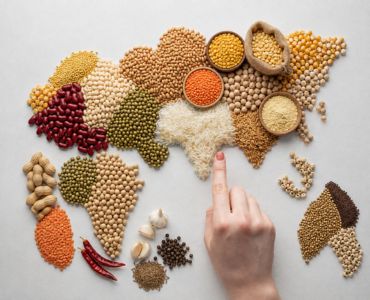
A few months ago, while attending a global food sector summit in a European capital, our consulting team sat listening to the keynote speech of a prominent CEO whose multinational conglomerate moves millions of tons of food across five continents. He was a man who understood the global palate, a man whose everyday job was tracking how a crop harvested in one hemisphere turns into a dinner conversation in another. Midway through his presentation, he said something that hung heavily in the air—and has refused to leave our minds since.
“India,” he noted, looking at a slide displaying the vast agricultural biodiversity of the subcontinent, “possesses some of the finest food products known to humanity. Your spices are legendary, your grains are pristine, and your traditional recipes are masterclasses in culinary balance. Yet, walk into a premium supermarket in Paris, London, or New York, and you will barely find them on the mainstream shelves. India has world-class tastes, but it has not yet learned how to sell them to the world.”
At ATBC, whether working with brands across our offices in Kerala or the UAE (Dubai), this observation hits close to home. As a society, we take immense pride in our products. We rightly boast that our spices changed the course of global history, drawing seafaring traders to our shores centuries ago. But historical pride cannot substitute for a modern, sustainable market strategy. Why do our exceptional products falter on the international stage?
With India recently cementing pivotal framework agreements and advancing toward historic free trade milestones with the European Union, a market of nearly 450 million affluent consumers is closer than ever. Yet, if our domestic industries do not radically re-engineer their approach, this open gate will only serve to highlight our structural limitations.
True transformation requires moving away from short-sighted trade mechanics toward Purpose-Driven Business Transformation. By looking through the lens of the Quadruple Bottom Line (QBL) framework—People, Planet, Profit, and Purpose—we can break down the four critical hurdles our entrepreneurs face and map out the path to global success.
1. The First Handshake: The Psychology of Packaging (Planet & Purpose)
Let us begin with a simple human truth: we eat with our eyes before we ever eat with our mouths. In the theater of global retail, the packaging is the first handshake. It is the silent salesman standing on the shelf.
In India, packaging philosophy has traditionally been driven by basic utility: keep the humidity out and hold the food in. On the global stage, packaging is an extension of lifestyle, aesthetics, and corporate ethics. Western consumers increasingly demand sustainable, eco-friendly materials; they are repelled by excessive plastic. They look for clean, minimalist designs that convey luxury, health, and transparency.
If we treat packaging as an afterthought or a cost-cutting measure, we are effectively telling the global consumer that the contents inside are cheap.
The QBL Realignment: At ATBC, we advise brands to stop viewing packaging as a mere container and start seeing it as a declaration of their Planet and Purpose metrics. Transitioning to biodegradable materials, intelligent design, and plastic-free alternatives isn’t just an environmental choice—it is the exact passport needed to clear the aesthetic filters of the premium global consumer.
2. The Border Guard: The Crucible of Quality Compliance (People & Profit)
The second hurdle is far more rigid because it is enforced by the rule of law. Europe and North America possess the world’s most uncompromising, unforgiving quality control and food safety architectures.
In our domestic market, we are often remarkably forgiving of supply chain ambiguities. But when our containers dock at the ports of Rotterdam or Hamburg, that cultural leniency collides with a cold, scientific wall of European food safety regulations. Organizations like the European Food Safety Authority (EFSA) look for trace residues of chemical pesticides, heavy metals, microbial contamination, and unauthorized artificial colorings.
Winning globally requires shifting from a culture of “managing errors” to a culture of absolute prevention. If an Indian enterprise systematically aligns its supply chains with the gold standards of EU compliance, it doesn’t just unlock Europe; it unlocks the world. A product optimized to pass European border inspections can be adapted to the regulatory nuances of Australia, Japan, or New Zealand with minimal friction.
The QBL Realignment: This is where the People metric takes center stage. A truly responsible business ensures that its farmers, laborers, and supply chain handlers are trained in safe, non-toxic, organic practices. By protecting the people at the source, you protect the end consumer. This radical commitment to quality eliminates product rejections, securing long-term, compounding international profit.
3. Cultural Curation: Designing for the Global Palate (Purpose & Strategy)
There is a common, naive assumption among many domestic producers that because our food or products are deeply loved by us, they will naturally be loved by everyone else exactly as they are. This is a dangerous marketing blind spot. Each population across the globe has an entirely distinct set of priorities, flavor tolerances, and dietary relationships.
Global marketing requires cultural curation. It means asking: How do I retain the soul of my product while adapting its form to fit their lifestyle?
Look at how the West marketed oats to India. They didn’t force us to eat bland, sweet porridge; they understood our breakfast habits and launched “Masala Oats” to suit our specific cultural preferences. Why are we not doing the reverse? Our traditional superfoods, like turmeric, ginger, jackfruit, and millets, are currently trending across the Western wellness landscape. Yet, it is Western brands that are turning them into beautifully curated “Golden Milk Mixes” and “Millet Energy Bowls,” while our indigenous companies watch from the sidelines.
In the era of Artificial Intelligence, tracking consumer sentiment is no longer a guessing game. Today, using AI data analytics, an enterprise in Kerala can know precisely what a 25-year-old in Madrid looks for in a healthy breakfast snack. The data is waiting; the willingness to listen, curate, and adapt is what we must build.
4. The Power of the Narrative: Responsible Storytelling (The Ultimate QBL Integration)
In the modern marketplace, it is not the raw product itself that makes the sale; it is the communication surrounding it.
We live in a world where an average-quality product with brilliant, emotionally resonant storytelling will consistently outsell a magnificent-quality product that suffers from silent, uninspired marketing. Think of French wine or Italian olive oil. They have spent generations building a meticulous, romantic narrative around their terroir—the soul of the soil, the tradition of the vineyard, the poetry of the harvest.
What do we do with our products? We often reduce our communication to raw, dry metrics or hyper-local clichés. We sell our spices as commodities by weight, rather than selling the romance of the Western Ghats, the ancient wisdom of wellness, or the clean, sun-drenched estates where these crops are nurtured.
| QBL Pillar | Traditional Domestic Approach | ATBC Global QBL Blueprint |
|---|---|---|
| Purpose | Transactional; focused purely on immediate sales volumes. | Value-driven; built on authenticity, sustainability, and transparency. |
| People | Focuses heavily on catering only to domestic palate preferences. | Deeply researches and respects the cultural nuances of the global consumer. |
| Planet | Heavy reliance on traditional, non-recyclable plastic packaging. | Uses eco-forward, minimalist, biodegradable, or circular packaging. |
| Profit | Competes on low margins, raw volume, and price cutting. | Commands premium pricing through superior brand storytelling and compliance. |
The Road Ahead: A Blueprint for Total Business Transformation
While we have analyzed these four pillars through the lens of the food industry, this is a universal mirror for every manufacturing sector—from textiles and garments to traditional wellness, Ayurveda, handicrafts, and engineering goods.
The upcoming trade agreements with the European Union represent a historic bridge. It is an invitation to transition from a localized manufacturing economy to a global economic powerhouse. But a bridge is only useful if you are prepared to cross it. If our packages remain unappealing, if our quality controls remain casual, if our products refuse to adapt to foreign consumers, and if our marketing remains quiet, we will find ourselves stranded on the riverbank while others march across.
The world is ready to experience what India has to offer. The potential is undeniable. It is time our business strategies grew as sophisticated as our inheritances.
About ATBC
Founded by Dr. Asif Theyyampattil, ATBC is a premier business consulting firm operating across Kerala and Dubai. We specialize in purpose-driven business transformation, guiding organizations to scale globally by aligning their operations with the Quadruple Bottom Line (QBL) framework for sustainable, responsible, and highly profitable growth.